
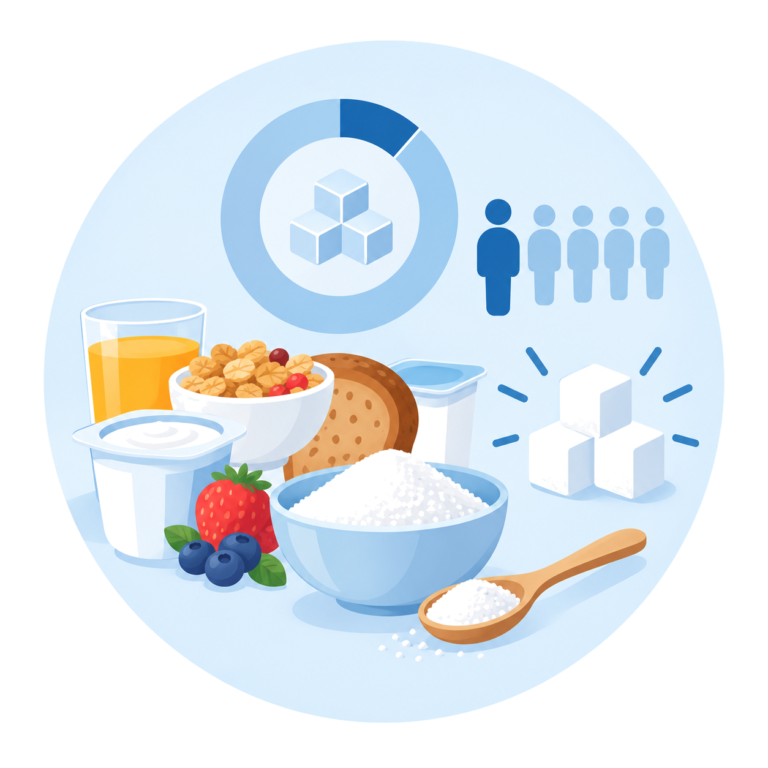
We’re used to thinking of sugar as something found in candy, pastries, or sweet soda. But what if you gave up desserts a long time ago, yet you’re still consuming 2–3 times the daily recommended amount of sugar?
It’s all about hidden sugar—added sweeteners that manufacturers disguise under familiar or “natural” names.
Why is this dangerous for the body?
Sudden spikes in glucose and insulin levels: these cause chronic fatigue, a constant feeling of hunger, and cravings for quick snacks.
Metabolic disorders: Excess added sugar leads to fat accumulation in the liver and increases the risk of developing type 2 diabetes and cardiovascular disease.
Systemic inflammation: It negatively affects blood vessel health, the immune system, and skin health.
A Hidden Threat to the Cardiovascular System
Excess hidden sugar is converted by the liver into triglycerides (fats), leading to fatty liver disease and the rapid development of atherosclerosis.
Consistently high glucose levels trigger the process of glycation—the “sugar coating” of proteins—causing blood vessel walls to lose their elasticity, become brittle, and prone to inflammation. This is a direct path to chronic hypertension, metabolic disorders, and cardiovascular events.
Top “healthy” foods that are actually full of sugar:
Yogurts with fruit fillings. A single small bottle of drinkable yogurt or a cup of “fitness” yogurt can contain up to 4–5 teaspoons of sugar (the same amount as in a slice of cake).
Muesli, granola, and cereal bars. They’re often baked in sugar or corn syrup, adding an extra dose of glucose.
Packaged juices and smoothies. Even labels that say “no added sugar” mean the product is stripped of fiber, leaving only concentrated fructose, which is instantly absorbed into the bloodstream.
Ready-made sauces (ketchup, teriyaki, Caesar salad dressing). A standard tablespoon of ketchup contains about 1 teaspoon of sugar.
Breakfast cereals and fitness cereals. Even when whole grains are added, they are often generously coated with sugar.
How can you avoid being taken advantage of?
Read the ingredient list: ingredients are listed in descending order of quantity. If sugar is among the first 3–4 items, it’s best to avoid the product.
Look for “alias” names: maltodextrin, molasses, agave/Jerusalem artichoke syrup, high-fructose corn syrup, dextrose, maltose, and concentrated fruit juice. They all affect the body in virtually the same way.
Choose basic foods: plain white yogurt instead of sweetened yogurt (add fresh berries yourself), whole-grain oats instead of instant oatmeal, natural spices, and olive oil instead of store-bought dressings.
Taking care of your health starts with the little things on your plate!
However, if you’ve been consuming foods with hidden sugar for a long time, it’s worth checking how your body is handling it.
What the endocrinologist at Docos Medical recommends:
- Get tested for glycated hemoglobin (HbA1c) — this will show your average blood sugar level over the past 3 months.
- Undergo a routine cardiology check-up to rule out the effects of glucose on your blood vessels.
- If necessary, set up continuous glucose monitoring to accurately track your body’s response to various foods.
Visit your family doctor or endocrinologist for a preventive checkup to keep your health under complete control.”
Author: Alexander Stanislavovich Nenashev
General practitioner, endocrinologist.