Why do 70% of our patients undergo exercise stress testing?
Today, almost 70% of patients in the cardiology department of Docos Medical undergo diagnostic tests with controlled physical exercise.
For some patients, these tests are repeated during the course of treatment. What is most interesting is that patients not only do not perceive this as an unnecessary financial expense, but also remain genuinely grateful to their doctors for this approach. And here is why.
Imagine the human body as a complex system capable of maintaining internal balance on its own. It can be compared to a glass of water: if there is not much liquid in it and the walls are high, even a strong push will not make the water spill over the edge. But if the glass is filled to the brim, even the slightest touch will result in a puddle.
This is the main purpose of stress testing: to safely take the cardiovascular system out of its resting state and accurately measure its ability to return to its baseline equilibrium.
At Docos Medical, we use a highly informative and comprehensive triage approach: electrocardiographic monitoring (ECG), ultrasound examination (echocardiography) and expert gas analysis.
For the vast majority of clinical situations, this set of equipment is more than sufficient. If, however, a specific diagnostic task requires advanced imaging technology, such as PET or cardiac MRI, we refer the patient to partner institutions with the appropriate equipment.
How are exercise stress tests performed and what equipment do we use?
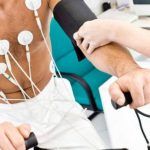
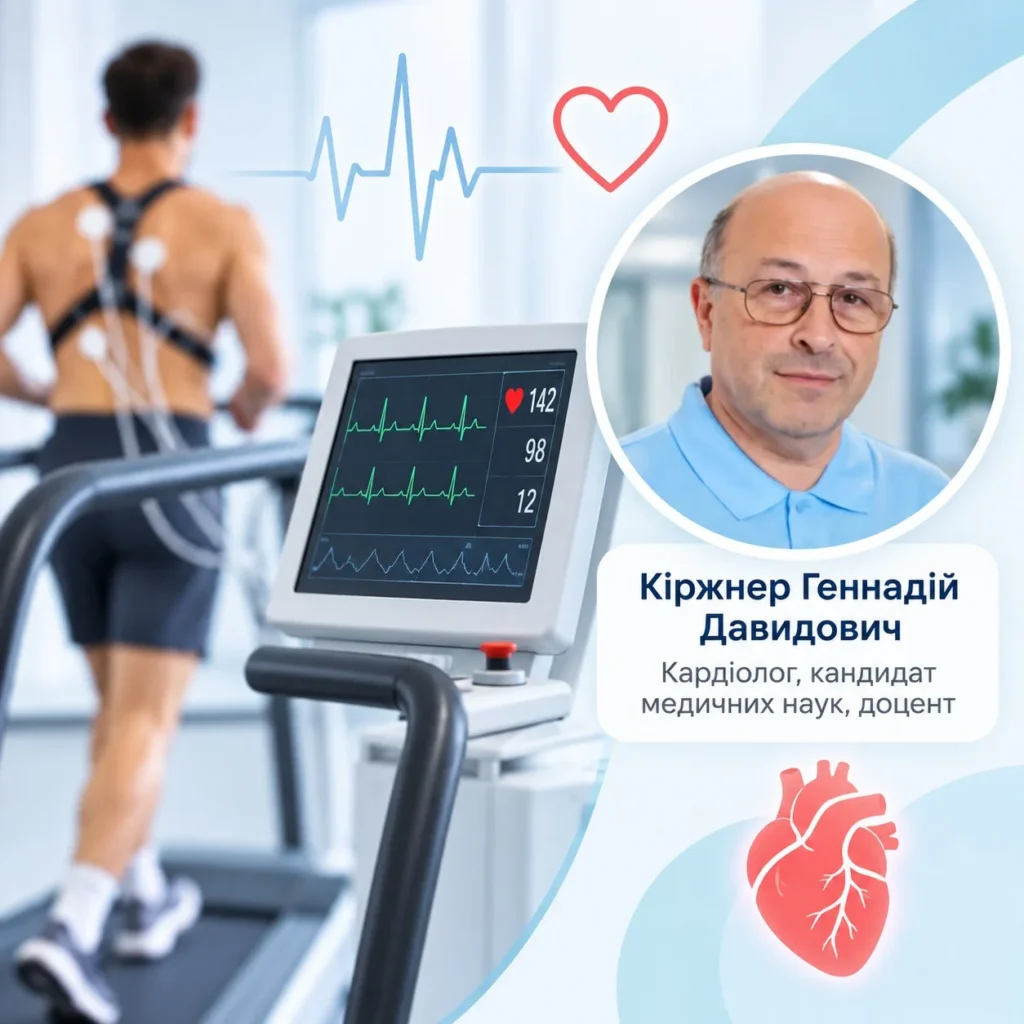
Controlled cardiac stress is usually created through the patient’s natural muscular activity on specialized medical cycle ergometers or treadmills.
While the patient pedals or walks/runs on the treadmill, doctors continuously record physiological parameters. Traditionally, this involves electrocardiographs, blood pressure monitors and ultrasound systems. Some international clinics also use expensive imaging techniques such as MRI, SPECT and PET.
What clinical problems can cardiac stress testing help address?
Successfully completing a stress test is one of the key indicators of the reliability and exercise capacity of the cardiovascular system. Exercise testing provides physicians with important answers to a wide range of clinical questions:
- Diagnosis of coronary artery disease: does the myocardium receive sufficient oxygen during active exercise?
- Assessment of heart failure: is the heart capable of consistently handling a given level of physical exertion?
- Hypertension management: has the medication been appropriately selected to control blood pressure?
- Assessment of the respiratory system: is the current treatment for bronchial asthma effective?
- Sports monitoring: is the training process properly structured, and is the athlete making measurable progress?
- Cardiac rehabilitation assessment: how successfully is the patient recovering after vascular events or surgery?
- Sports safety: is participation in competitive sports safe for the individual? During testing, we can deliberately create conditions that are even more demanding than those the athlete may encounter during competition.
Information for medical colleagues
To ensure maximum diagnostic accuracy and effectiveness, we ask colleagues referring patients to our cardiology center to clearly define the clinical question:
“What specific pathology or hidden abnormality do we need to verify during the examination?”
Author: Gennadiy Kirzhner
Cardiologist, candidate of medical sciences, associate professor.