How to lose weight safely, especially with ischemic heart disease and diabetes.
Why is it important to control your weight after a heart attack?
!Weight management is particularly important for people with type 2 diabetes or prediabetes.
Even a modest reduction in body weight can be clinically significant. According to current ADA guidelines, losing approximately 5–7% of initial body weight can improve glycemic control and other cardiovascular risk factors. More substantial and sustained weight loss—exceeding 10%—offers additional metabolic benefits for some patients.
For instance, for a person weighing 100 kg, losing even the first 5–7 kg—gradually and under medical supervision—can be a significant achievement.
However, after a heart attack, the “the faster I lose weight, the better” approach does not apply.
Overly strict diets, fasting, and drastic calorie restriction can lead to muscle loss, weakness, nutrient deficiencies, and reduced exercise tolerance. Therefore, the goal should not simply be a lower number on the scale, but the reduction of excess adipose tissue while preserving muscle mass and functional capacity.
Nutrition and Physical Activity: The Foundation of Safe Weight Loss
There is no universal “cardiac weight-loss diet.” Nutrition must be tailored to the patient’s condition, co-existing diabetes, kidney function, physical activity levels, and prescribed treatment.
In most cases, the approach centers on a moderate calorie deficit and a gradual shift in dietary habits.
Priority should be given to vegetables, whole grains, legumes, fish, lean protein sources, nuts, and unsaturated plant-based fats. At the same time, it is advisable to limit ultra-processed foods, trans fats, and excessive amounts of saturated fats, salt, sugary drinks, and products with high levels of added sugar.
For a person with diabetes, the caloric content of food is not the only factor that matters. It is also necessary to consider glucose levels, the type of carbohydrates, meal regularity, and the risk of hypoglycemia associated with certain blood-sugar-lowering medications.
The second essential component is physical activity.
After a heart attack, physical activity must be resumed gradually. Cardiac rehabilitation programs allow for the selection of a safe exercise intensity tailored to the patient’s cardiovascular health.
This may involve controlled walking, cycling, and other aerobic exercises, followed—provided there are no contraindications—by strength training.
It is important not merely to “walk more,” but to understand what level of exertion is safe for the specific patient. A doctor may recommend exercise stress testing to assess functional capacity and determine the appropriate individual training intensity.
And if diet alone isn’t enough: can weight-loss medications be used?
Modern obesity treatment goes beyond the standard advice to “eat less and move more.”
Obesity is viewed as a chronic condition that, in some cases, requires pharmacological treatment. This is particularly relevant for patients who simultaneously have obesity, type 2 diabetes, and cardiovascular disease. Today, modern medications—specifically GLP-1 receptor agonists and dual GIP/GLP-1 agonists—can be used to treat obesity and/or type 2 diabetes.
Semaglutide and tirzepatide can lead to clinically significant weight loss and improvements in metabolic markers. Data also indicate cardiovascular benefits associated with certain drugs in this class for specific patient groups.
However, these medications should only be prescribed by a physician following a heart attack.
Factors such as indications, contraindications, comorbidities, kidney function, the risk of side effects, and other medications the patient is taking must all be considered. One should not attempt to self-medicate for obesity following a cardiovascular event.
It is also important to remember that weight-loss medication is not a substitute for cardiac rehabilitation. The best results come from a comprehensive approach: medically indicated drug therapy, proper nutrition, physical activity, risk factor management, and regular monitoring.
**The primary goal is not merely weight loss, but the reduction of recurrent cardiovascular risk.**
After a heart attack, the number on the scale is just one of many indicators.
A physician evaluates blood pressure, lipid profile, blood glucose levels (including HbA1c), waist circumference, kidney function, exercise tolerance, body composition, and other risk factors.
Consequently, two patients with the same body weight may require completely different recovery programs.
Healthy weight loss after a heart attack is not a short-term diet undertaken before a vacation. This is part of a long-term secondary prevention strategy.
The goal of cardiac rehabilitation is to help a person not only return to their normal life after a heart attack but also make that life more active and heart-healthy.
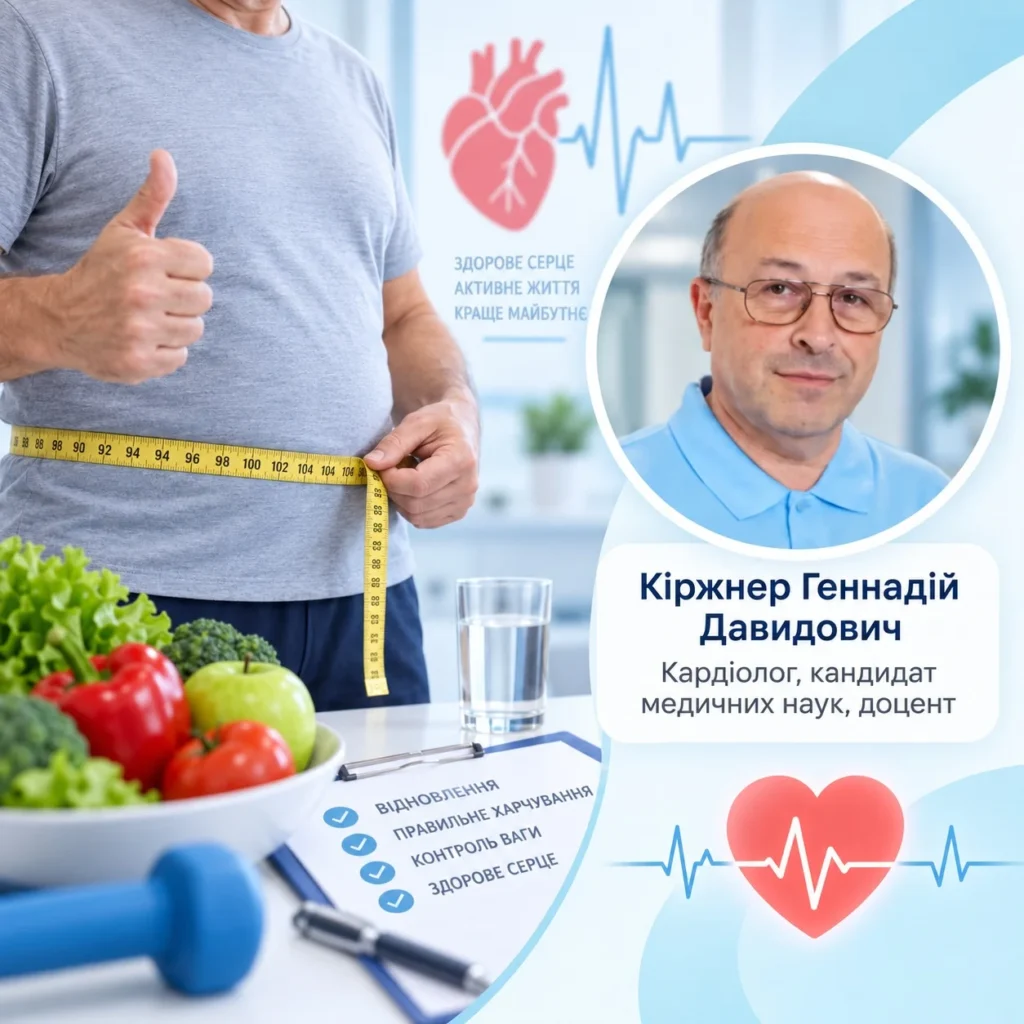
Author: Hennadii Davydovych Kirzhner
Cardiologist, Candidate of Medical Sciences, Associate Professor.